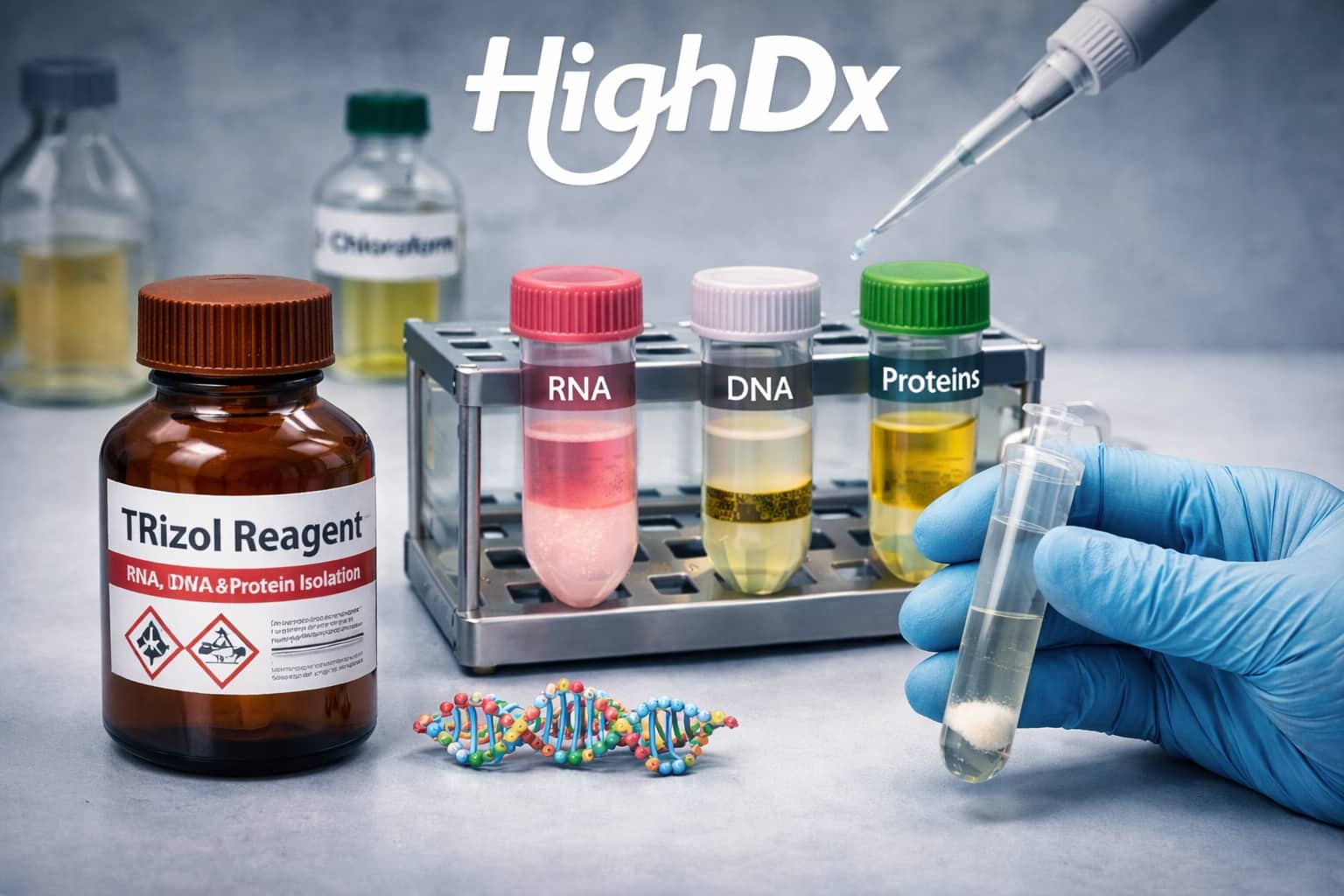
TRIzol Reagent is a widely used chemical solution for isolating RNA, DNA, and proteins from biological samples. It is considered a gold standard in molecular biology laboratories due to its efficiency, reliability, and ability to extract high-quality nucleic acids from various sample types.
What Is TRIzol Made Of?
TRIzol is a monophasic solution primarily composed of: • Phenol – Dissolves proteins and facilitates phase separation. • Guanidine isothiocyanate (GITC) – A powerful chaotropic agent that lyses cells and inactivates RNases. • Proprietary stabilizing components – Improve extraction efficiency and preserve nucleic acid integrity.
How TRIzol Works – The Scientific Principle
TRIzol extraction is based on the acid guanidinium thiocyanate–phenol–chloroform method. The general mechanism includes:
1. Cell Lysis: The reagent breaks open cells and denatures proteins while protecting RNA from degradation. 2. Phase Separation: After adding chloroform and centrifugation, three layers form: – Upper aqueous phase: Contains RNA – Interphase: Contains DNA – Organic phase: Contains proteins and lipids 3. RNA Precipitation: RNA is precipitated using isopropanol, washed with ethanol, and dissolved in RNase-free water.
Key Applications of TRIzol Reagent
TRIzol is commonly used for: • Total RNA extraction for gene expression studies • DNA isolation for genetic analysis • Protein extraction for proteomics and Western blotting • Downstream applications including RT-PCR, qPCR, sequencing, microarray analysis, and cloning
Advantages of Using TRIzol
• High yield and purity compared to many column-based kits • Suitable for diverse sample types (animal tissues, plant tissues, cultured cells, bacteria, viruses) • Enables simultaneous isolation of RNA, DNA, and proteins from a single sample • Cost-effective for large sample processing
Safety Considerations
TRIzol contains hazardous chemicals such as phenol and chloroform. Always use appropriate personal protective equipment (lab coat, gloves, eye protection) and work under a chemical fume hood. Avoid mixing waste with bleach or acids to prevent toxic gas formation. Conclusion
TRIzol Reagent remains one of the most trusted and widely used solutions for nucleic acid and protein extraction. Its high efficiency, versatility, and compatibility with advanced molecular biology techniques make it an essential reagent in research laboratories worldwide.